The Welcome Desk Before the Resort Lobby
The welcome desk before the resort lobby can support more personal service. See how clear roles, discreet conversations and thoughtful details shape a stay.
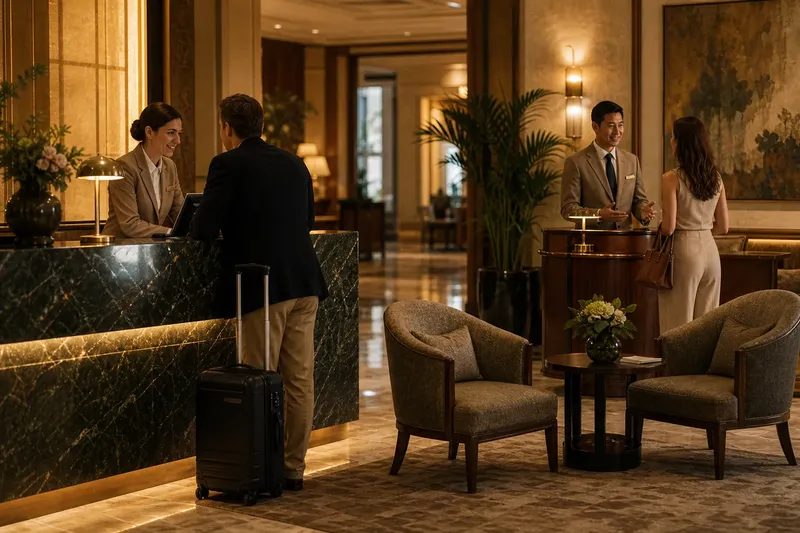
The welcome desk before the resort lobby sets the tone for service, not the route through the casino. A guest checking into a hotel, meeting a host or asking about a dining reservation may need different kinds of attention, and the welcome area can make those distinctions feel natural rather than bureaucratic.
That depends less on adding stations than on shaping the conversations around them. A host who can greet someone without taking over a private check-in, a comfortable place to pause and a surface for handling documents each contribute to a more considered welcome.
Service with purpose
A reception counter remains useful for tasks that call for a screen, paperwork or a clear working surface. It can handle room access and account questions without asking staff to balance documents across a lounge chair. But it need not define every interaction in the space.
Nearby, a host can welcome invited guests or coordinate a planned visit; a concierge can take on detailed requests; and a greeter can answer a simple question or introduce the right colleague. The distinction matters because guests should not have to explain the same request repeatedly to find the person who can help.
Give each role a recognisable purpose, then make the handover easy to understand. A short introduction from one staff member to another is more reassuring than a vague gesture towards another counter.
Comfort and discretion
Furniture can support the pace and privacy of a conversation. A pair of chairs near a host stand suits a brief discussion, while a firm counter is better for documents or a device. A small ledge gives a guest somewhere to rest a bag; upholstery can soften the waiting area without making it feel like a separate lounge reserved for select visitors.
Privacy deserves particular care. A guest asking about a booking or personal matter may not want to speak across an open room. A side-facing position, a lower counter section or a nearby quieter seat can give staff a more discreet place to continue the conversation while keeping the welcome area accessible.
Materials help establish tone, too. Polished stone can make the formal service point feel substantial, while timber or fabric nearby can make informal conversation feel less procedural. Use the contrast to clarify different kinds of service, rather than dressing every surface alike.
Small details, warmer service
Staff posture and everyday objects often shape the experience more than decorative gestures. A host who can look up from a screen, a chair angled towards the conversation and a tidy surface make it easier to begin speaking. The aim is to feel attentive without making each arrival into a performance.
- Greeting point: If a guest can see who is available, then keep that position open and staffed; if it is hidden behind furniture, move the greeting point or add a clear sign.
- Seating: If guests can sit without feeling they have joined a formal queue, then retain the arrangement; if seats crowd the work area, shift them to a quieter nearby position.
- Conversation surface: If staff need a flat place for forms or a tablet, then provide a counter; if the exchange is mainly conversational, offer a lower, more approachable point.
- Bag space: If luggage has nowhere to rest, then add a stable ledge or clear a suitable surface; if bags obstruct staff work, keep that surface separate from the service counter.
- Private requests: If ordinary conversation carries across the room, then move sensitive discussions to a side position; if that position feels secluded, keep it in staff view and easy for guests to reach.
- Role clarity: If guests cannot tell who handles a request, then clarify staff introductions or add a concise role sign; if several signs compete for attention, remove the least useful and brief staff to explain the distinction.
These choices are easiest to judge by the interaction they support. A chair that looks inviting but leaves a guest facing away from the person helping them may need to be turned; a beautiful counter that makes a private question public may need a more discreet companion point.
How should service feel?
Does a resort still need a reception desk?
Often, yes: room access, account questions and paperwork may call for a dedicated counter and equipment. A separate greeting point can handle simple questions without turning every arrival into a formal transaction.
How can a host stand feel inclusive?
Keep the approach open and make its purpose clear to all guests, rather than implying it is reserved for a particular group. If some requests belong elsewhere, staff can explain the distinction warmly and offer a direct handover.
Where should guests discuss a private request?
Use a quieter side position or nearby seat where voices are less exposed to passing visitors. Keep it comfortable and accessible, and avoid sending guests into a space that feels like a staff-only area.
How can staff avoid passing guests around?
Agree which team owns common requests and teach staff to introduce the next person when a handover is needed. A guest should hear who is taking over and why, rather than being pointed towards an unexplained desk.
A welcome in practice
Imagine a resort has one high reception counter, a host stand beside it and no comfortable place to discuss a reservation. In this invented situation, the design team identifies three needs: document-based check-in, planned host meetings and quieter booking conversations. They keep the counter for check-in, turn the host stand towards arriving guests and place two chairs beside a small side table away from the busiest part of the welcome area.
Next, staff agree that the greeter can introduce guests with planned meetings to the host, while reception handles room details. They try the arrangement in a staff walkthrough: a guest with a booking question is directed to the chairs, while someone needing room access uses the counter. The expected observable result is that each conversation has an appropriate place and staff can make a clear handover; the trade-off is that the chairs take up space that might otherwise hold another decorative feature.
The same approach can guide a refurbishment or a staff briefing. Start with the conversations the venue needs to support, then choose the furniture and roles that make those conversations easier.
Coordination behind the scenes
Thoughtful furniture cannot compensate for unclear service. Staff need to know who handles a request, how to pass it on and what to do when the usual colleague is occupied. When the internal division is invisible to a guest, the handover should still feel deliberate.
Make room for different ways of interacting, including standing and seated conversations, mobility needs, luggage and group arrivals. Keep waiting furniture distinct from work surfaces so a guest can pause without obstructing someone handling a check-in.
The welcome desk before the resort lobby works best as one part of a hospitality offer: a dependable place for formal tasks, supported by people and details that make other conversations feel considered. A useful final check is simple: can staff explain their role in a sentence, and can guests ask for help without feeling they have chosen the wrong place?